04 / Research
When Capital Gets More Expensive
Why South African businesses should look at electricity procurement as a capital-allocation decision — not simply a utility expense.
NEAT Intelligence | September 2026 | South Africa
South African businesses are entering another period in which the cost of capital and the cost of operating are moving in the same direction.
On 23 September 2026, the South African Reserve Bank increased the policy rate by 25 basis points to 7.25%. The decision was unanimous and comes as the Bank responds to renewed global inflation pressure, particularly from higher fuel prices and disruptions to global energy supply.
For commercial and industrial operators, the significance extends beyond the interest rate itself.
Higher borrowing costs affect working capital, overdrafts, vehicle and equipment finance, property debt and the hurdle rates businesses use when deciding where to deploy capital. At the same time, electricity remains a material and recurring operating cost for many South African businesses.
The strategic question therefore becomes increasingly important:
How much capital should a business commit to buying energy infrastructure when alternative structures can potentially deliver lower-cost electricity without requiring the same upfront capital allocation?
A More Expensive Operating Environment
The monetary policy decision arrives against a difficult economic backdrop.
Annual consumer inflation reached 4.4% in August 2026, while the Reserve Bank now expects headline inflation to move above 5% later in 2026 and into early 2027 before moderating.
Fuel is a significant part of the current inflation pressure.
At the same time, the Reserve Bank has revised South Africa’s 2026 growth forecast to approximately 1.2%, with growth risks still tilted to the downside.
For businesses, slower economic growth does not necessarily mean costs stop increasing.
It can mean the opposite challenge: protecting margins in an environment where revenue growth is constrained while finance, transport, energy, wages and other operating inputs remain under pressure.
That makes cost restructuring increasingly important.
Energy Is Also a Capital-Allocation Decision
Electricity is normally discussed as an operating expense.
But the way a business chooses to procure that electricity can create a significant capital decision.
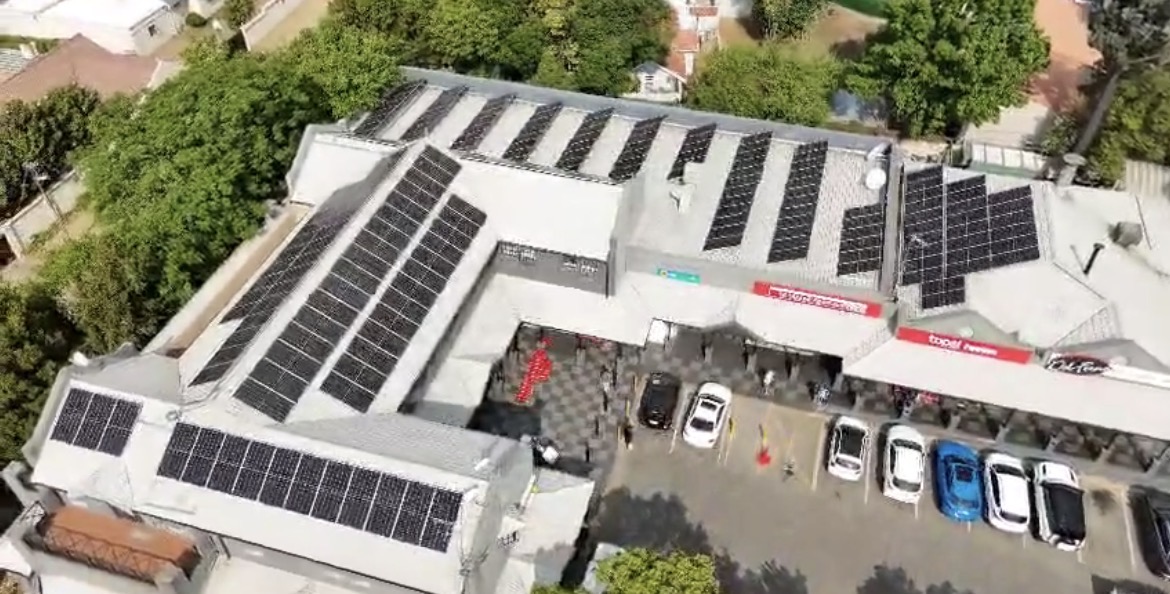
A business purchasing its own solar PV, battery storage and associated electrical infrastructure may need to deploy substantial upfront capital.
That investment may still make economic sense.
However, the same capital may also be competing internally with:
- inventory;
- production equipment;
- new branches or facilities;
- technology;
- logistics;
- acquisitions;
- debt reduction;
- staff expansion; or
- working-capital requirements.
When interest rates rise, the opportunity cost of capital becomes more visible.
The correct question is therefore not simply:
“Can this business afford solar?”
It is also:
“Is owning the energy asset immediately the best use of this business’s capital?”
For some businesses, the answer will be yes.
For others, alternative procurement structures may create a better allocation of capital.
The PPA Alternative
A commercial Power Purchase Agreement can separate access to renewable-energy infrastructure from the requirement to purchase the infrastructure upfront.
Under a typical behind-the-meter PPA structure, a third-party investor or project company finances and owns the generation asset while the commercial customer purchases the electricity produced under a long-term agreement.
The commercial case depends on the site, consumption profile, system design, financing structure and agreed tariff.
Where the economics work, the PPA tariff can be structured below the customer’s avoided electricity cost, allowing the business to begin benefiting from a different electricity cost base without funding the entire solar installation from its own balance sheet.
This changes the conversation.
Instead of asking management to approve a large energy CAPEX allocation, the business can evaluate a long-term electricity procurement contract.
Capital remains available for the company’s core operations while the energy infrastructure is financed separately.
For businesses operating in a high-interest-rate environment, that distinction can become increasingly valuable.
Predictability Has Value
A PPA is not valuable simply because somebody else owns the panels.
Its larger strategic value can be the ability to create greater visibility over a portion of the company’s future electricity cost.
South African commercial electricity users remain exposed to changing energy tariffs, tariff structures and network charges.
A well-structured PPA establishes an agreed pricing methodology for the electricity generated by the renewable-energy system, including the contractual escalation mechanism.
This does not eliminate every electricity cost.
Businesses generally remain connected to the grid and may continue paying applicable network, capacity, demand and other charges.
But it can create a more predictable cost for a defined portion of the energy consumed.
For finance teams building multi-year operating budgets, that predictability itself has value.
Rent-to-Own Creates a Different Path
Not every business wants a long-term PPA.
Some operators ultimately want to own their energy infrastructure but do not want to commit the full purchase price upfront.
A rent-to-own structure provides another route.
Instead of purchasing the system immediately, the business makes structured payments over an agreed period while using the energy infrastructure operationally.
Subject to the specific commercial agreement, ownership can transfer to the customer once the contractual term and payment obligations have been completed.
This can give businesses a pathway toward eventual asset ownership while spreading the capital requirement over time.
It may be particularly relevant for companies that:
- have strong long-term confidence in a specific property;
- want the renewable-energy asset on their balance sheet eventually;
- prefer ownership to an indefinite energy-purchasing arrangement;
- have predictable cash flows but wish to preserve current liquidity; or
- want to align energy-asset payments with the period in which the infrastructure is generating operational value.
The financing cost remains real.
Rent-to-own does not make capital free.
The advantage is primarily one of timing, liquidity and capital allocation.
PPA, Rent-to-Own or Direct Purchase?
There is no single financing structure that is automatically correct for every commercial site.
The decision depends on the company’s balance sheet, electricity consumption, property tenure, risk appetite and long-term operating strategy.
Direct Purchase
Can suit businesses that have available capital, intend to occupy the property long term and want immediate ownership of the infrastructure.
The business funds the project and receives the economic benefits and responsibilities associated with ownership.
Rent-to-Own
Can suit businesses that want eventual ownership but prefer to distribute payments over a longer period instead of making the full capital investment upfront.
Power Purchase Agreement
Can suit businesses that want access to renewable generation while preserving capital for core business activities and paying for electricity under a longer-term procurement arrangement.
None should be selected purely because of the label attached to the financing model.
They should be compared using the economics of the actual site.
The Cost of Doing Nothing
There is another option available to every business:
Do nothing.
Continue purchasing all electricity using the existing supply structure and allocate no capital toward energy infrastructure.
For some sites, that may be rational.
For others, doing nothing is itself an economic decision.
The comparison should therefore not only measure solar against solar.
It should compare:
Existing electricity procurement
versus
Direct ownership
versus
Rent-to-own
versus
PPA structures
versus
Hybrid combinations of solar, storage and grid supply.
The important metric is the effect each option has on the organisation’s total energy cost, cash flow, balance sheet, operational resilience and long-term margin.
Lower Energy Costs Can Unlock Value Elsewhere
Every rand permanently removed from an avoidable operating cost can potentially be deployed elsewhere in the enterprise.
For an industrial operator, that may mean another production line.
For a retailer, another store.
For a logistics company, additional vehicles.
For a hotel, refurbishment.
For a data centre, additional computing infrastructure.
For an agricultural processor, expanded cold storage or processing capacity.
Energy strategy is therefore not only about electricity.
It is about what the business can do with the capital and operating margin that becomes available when its energy model is improved.
This is why renewable-energy procurement increasingly belongs in discussions involving the CFO and CEO alongside facilities and engineering teams.
The engineering determines whether the system works.
The financing structure determines how effectively that infrastructure contributes to the wider business.
What This Means for C&I Operators
The Reserve Bank cannot determine what a business pays Eskom, a municipality or a private electricity supplier.
But the current monetary environment reinforces an important principle for commercial operators:
Capital has a cost.
In a 7.25% policy-rate environment, businesses should be increasingly deliberate about where their own capital is deployed.
Energy infrastructure can potentially reduce a recurring operational cost, but businesses do not necessarily have to purchase that infrastructure outright to obtain the benefit.
PPAs, rent-to-own structures, direct ownership and hybrid financing models create different ways to solve the same underlying requirement:
secure reliable electricity at an economically sustainable cost while allowing the core business to keep investing in growth.
For C&I operators, the opportunity is not simply to install renewable energy.
It is to design an electricity strategy that supports the economics of the entire organisation.
Sources & Further Reading
Rethinking how your business pays for energy?
NEAT assesses the technical and commercial characteristics of C&I sites and helps businesses compare energy procurement and ownership structures.